
How to Compare Pilates Reformer Factories Before a Bulk Order
When customers compare Pilates Reformer factories, price is often the first thing they ask about. But once the conversation gets into product details, the questions can be quite different.
Some studio owners want to examine almost every part of a Reformer before ordering. They ask for close-up photographs of the rails, videos showing carriage movement, upholstery samples, and confirmation of the accessories included. Others already know which model they want and are mainly concerned about availability.
Our distributor customers usually approach us with a clearer purchasing plan. They know their markets, have their own product requirements, and often evaluate a manufacturer well before regular orders begin.
After working with different types of buyers, we've found that the differences between factories are not always obvious in a product catalog. Production arrangements, customization, packaging, and the way a factory handles problems can be just as important as the equipment itself.
1. Look Beyond the Price of the Reformer
It is quite normal for a buyer to receive different prices for Reformers that look similar in photographs.
The differences may come from the frame, rail system, carriage assembly, Footbar mechanism, upholstery, or finishing. Sometimes the machines are built to different specifications. Sometimes the quotation simply includes different accessories.
A Jumpboard, Sitting Box, or Tower attachment can make a considerable difference to the total price. Before comparing two offers, it helps to establish exactly what is included.
We also understand that customers do not all need the same product level.
Some distributors are looking for a competitively priced model that fits their existing product range. They already know what their customers are willing to pay and which specifications are necessary. Offering them a more expensive configuration does not necessarily make commercial sense.
Other buyers are prepared to spend more on particular details, whether that means a different rail system, more refined finishing, or additional adjustment options.
A higher price should reflect something the buyer can identify. At the same time, a lower price is not automatically a sign of poor manufacturing. Standardized designs and repeat production can help a factory control costs.
What matters is whether the Reformer meets the agreed requirements and performs reliably.
When comparing quotations, we would pay particular attention to the actual configuration, the accessories supplied, and any differences that affect daily use. Those details tell buyers much more than a price comparison on its own.
2. Pay Attention to the Parts You Will Actually Use
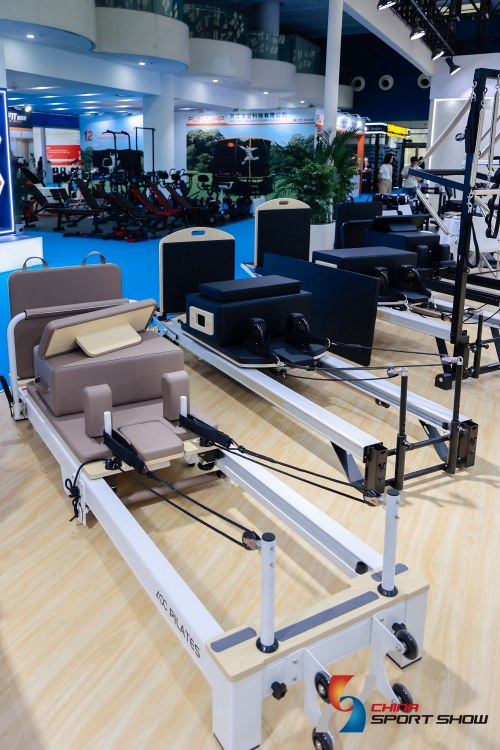
A Reformer can look excellent in a photograph and still feel quite different when someone uses it.
Carriage movement is one of the first things worth checking. The carriage should travel smoothly, without excessive sideways movement, catching, or unusual noise. The result depends not only on the rollers but also on the rail design, alignment, and assembly.
The Footbar is another important part. Instructors may adjust it repeatedly during classes, so the mechanism needs to operate conveniently and remain secure in the selected position.
Spring configurations, rope adjustment, and carriage dimensions also deserve attention. They affect how the machine is used, and buyers often have their own preferences.
Upholstery is easier to judge visually, but photographs do not tell the whole story. Foam consistency, stitching, material tension, and finishing around corners can make a noticeable difference between two machines.
Studio customers often want to examine these details carefully before purchasing. This is especially common when they are setting up their first location and have not yet settled on a preferred Reformer design.
We may need to show the same machine from several angles, demonstrate an adjustment, or confirm measurements that are not obvious in the catalog.
Experienced distributors tend to communicate differently. Many already have established specifications, so discussions can move directly to the relevant product differences, samples, and prices.
Neither type of communication is unusual. The important thing for a factory is to provide accurate product information rather than rely on attractive photographs or broad claims about quality.
For larger orders, consistency also matters. The machines delivered should match the approved sample in their construction, operation, and finish.
3. Understand How the Factory Arranges Production
Ready stock is important to some customers, particularly when equipment is needed for an upcoming studio opening or another time-sensitive project.
But it is worth checking what is actually available.
A factory may have completed Reformers ready for packing, partially assembled machines, or components prepared for the next production run. These are not the same as finished stock that can be shipped immediately.
The available colors, configurations, accessories, and quantities also need to match the order.
For established distributors, however, reliable supply is usually built through advance planning rather than last-minute stock purchases.
Our regular distributor customers generally evaluate products and discuss their requirements before establishing ongoing cooperation. Once their models and specifications are confirmed, we can coordinate production arrangements around their purchasing plans and give their agreed orders priority.
This is more useful to a distributor than depending on whatever happens to be left in the warehouse.
A factory needs to understand the quantities involved, the expected ordering pattern, and whether any special components require additional preparation. If the distributor plans to reorder the same model, maintaining its approved specifications is essential.
Production flexibility still matters. Orders may change, and customers sometimes need additional quantities sooner than expected. A manufacturer should be clear about what can be accommodated without disrupting existing commitments.
Minimum order quantities also vary. Standard models may be easier to produce in smaller batches, while special colors or structural modifications may require different arrangements.
The real question is whether the factory's production schedule fits the buyer's purchasing plan, not simply whether it advertises a short lead time.
4. Find Out How Much Customization the Factory Can Handle
Customization can mean something as simple as changing an upholstery color or as complicated as developing a modified Reformer.
Many studio customers want equipment that fits their interior. They may choose a particular frame finish, upholstery color, height, or accessory combination.
Distributors developing their own brands often have additional requirements. Logos, branded packaging, and product labels are relatively straightforward, but some projects involve changes to the structure itself.
A customer may want a different rail arrangement, a modified Footbar, new dimensions, or changes to the Tower connection.
These requests need technical evaluation. A modification to one component can affect the way other parts fit and operate, so it is not always possible to make a change simply because it looks straightforward in a drawing.
When discussing an OEM project, we need to understand what the customer wants to achieve before confirming whether a modification can be made.
Sometimes an existing model can be adapted. More complex requests call for custom development, including new drawings, prototype work, components, and testing before the revised design can be approved.
This affects both cost and production time.
It is also important to distinguish between a factory that can change the appearance of an existing product and one that can support mechanical development. Both services have value, but they meet different needs.
For distributors, a successful sample is only the beginning. The approved design must remain consistent when the next order is placed.
Clear specifications, component records, and communication about any design changes are particularly important for long-term OEM cooperation.
5. Use Factory Visits to Understand the Actual Manufacturing Process
Online communication can answer many questions, but some customers prefer to visit the factory before placing a bulk order.
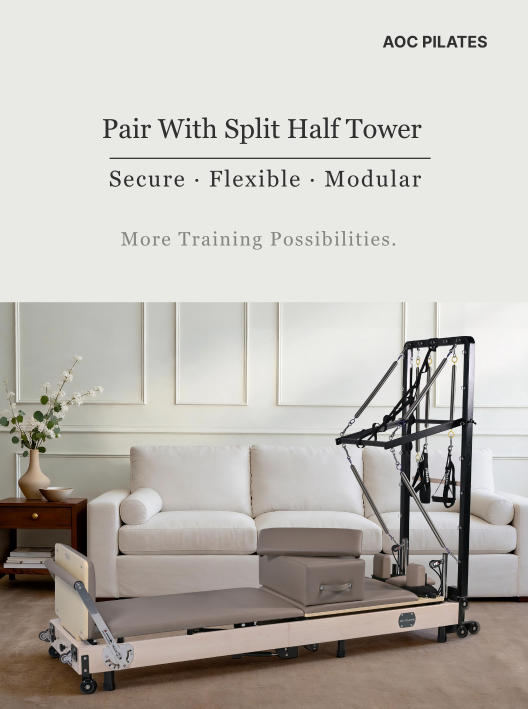
Studio owners often want to try the Reformers they have been discussing. They can experience carriage movement, test Footbar adjustments, compare frame heights, and examine upholstery finishes in person.
This can be especially helpful when several models look similar online.
Distributors may use the visit differently. Once they have evaluated the product, they often want to see how it is manufactured and discuss future production arrangements.
Seeing how Reformers are made gives buyers a clearer picture of the work behind the finished equipment and the factors that influence its quality.
Frame preparation, rail installation, carriage assembly, upholstery, and final inspection all contribute to the result. Seeing these processes also helps explain why two visually similar Reformers may have different manufacturing costs.
The showroom alone cannot answer every question. A carefully prepared display machine may look and operate well, but buyers also need confidence that regular production units will meet the same standard.
A factory does not necessarily need to manufacture every component itself. Many manufacturers purchase certain parts from specialized suppliers. What matters is how those parts are specified, checked, and assembled into the finished product.
For customized projects, meeting the people responsible for technical development can also make discussions more efficient.
Not every customer needs a formal factory audit. Some simply want to confirm the product and meet the manufacturer. Others have more detailed requirements involving quality records, production capacity, or inspection arrangements.
A useful factory visit should resolve questions that are difficult to settle through photographs and messages.
6. Don't Overlook the Wooden Crate
Packaging is one of those details that can seem unimportant during quotation discussions but become very noticeable when the equipment arrives.
A Reformer needs protection during international transportation. The frame, carriage, rails, upholstery, and accessories must be secured properly inside the packaging.
At the same time, the equipment has to come out of that packaging.
We received particularly useful feedback from a customer who had previously purchased Reformers from another supplier. The wooden crates used for those machines were packed so tightly that the customer had to dismantle the crates to remove the equipment.
After choosing our relatively spacious wooden crates, the customer specifically praised how much easier it was to take the Reformers out.
That feedback stayed with us because it highlighted something that is easy to overlook when concentrating on freight costs.
Compact packaging can reduce shipping volume, which is an advantage for some orders. But if the equipment is difficult to remove, the saving may come with extra work at the destination.
For distributors handling repeated shipments, unpacking is part of warehouse operations. For studio customers, it can affect the process of moving equipment into the premises.
We prefer to consider how a crate will be handled after arrival, not only how efficiently it fits into a container.
Of course, a larger crate is not automatically the right solution for every shipment. The equipment still needs to be well secured, and the additional volume has a cost.
Buyers comparing factories can look at the actual packing method, crate dimensions, protection around vulnerable parts, and the space available for removing the machine.
Wooden packaging must also be suitable for the destination country's import requirements. Where solid-wood packaging is used, the relevant ISPM 15 requirements may apply.
Good packaging should protect the Reformer during transportation without making it unnecessarily difficult for the customer to receive and handle.
7. Compare the Complete Order, Not Just the Unit Price
Once the product, quantity, and configuration are clear, the remaining costs become easier to compare.
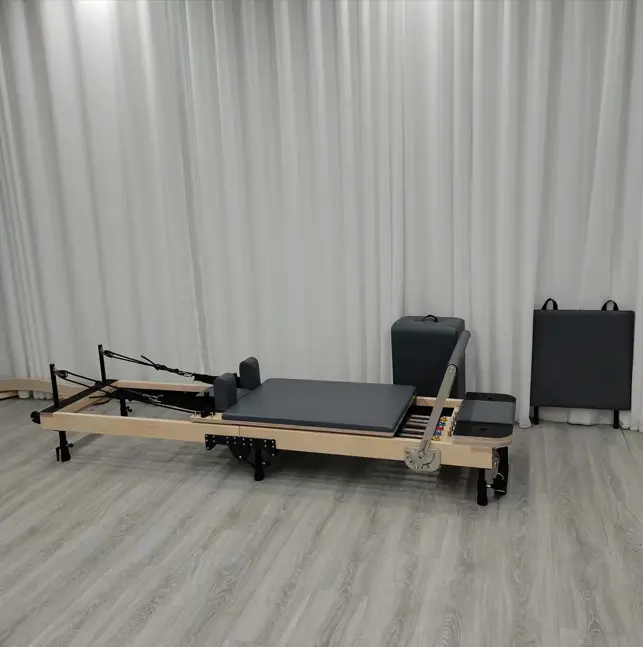
A quotation may include standard accessories and export packaging, or these may be priced separately. Custom logos, special finishes, and additional parts can also affect the final amount.
Shipping is another consideration. Reformer crates take up considerable space, so packaging dimensions influence container loading and freight costs.
The departure port and inland transportation arrangements can make a difference as well.
Some distributors have their own freight forwarders and prefer to manage shipping independently. Studio customers may need more assistance understanding how the equipment will reach their location.
It is important that the quotation states the agreed delivery terms and what each party is responsible for.
Payment arrangements, sample approval, and inspection before shipment are also worth settling early, particularly for a first order.
There is no benefit in comparing an equipment-only quotation with another offer that includes additional accessories or delivery services unless those differences are understood.
The same applies to packaging. A smaller crate may reduce freight costs, while a design that is easier to unpack may offer practical advantages after delivery.
These details are part of the real cost of receiving the equipment, even when they do not appear directly in the unit price.
8. Consider What Happens After Delivery
For a distributor, working with a Reformer factory is rarely limited to one shipment.
Once a model becomes part of the distributor's product range, future orders need to remain consistent. Changes to components, appearance, or specifications should be discussed rather than introduced without notice.
Spare parts are another important part of long-term cooperation.
Springs, rollers, ropes, pulleys, and other components may need replacement during normal equipment use. The factory should be able to identify compatible parts and provide information that helps customers maintain their machines.
Studio owners have similar needs, although their concerns are more immediate. If a Reformer develops a problem, they want to know what has happened and how it can be resolved without unnecessary downtime.
Photographs and videos can help technical staff understand an issue remotely. Where a fault could affect safety, the equipment should remain out of service until it has been properly inspected.
Warranty terms are useful, but practical assistance and access to suitable replacement parts are just as important.
For regular distributors, stable production and after-sales support are closely connected. They need confidence not only in the next shipment but also in the factory's ability to support the equipment already sold.
Conclusion
There are real differences between Pilates Reformer factories, and not all of them are visible in product photographs or quotations.
The most useful comparisons come from looking closely at the equipment, understanding how orders are produced, discussing customization, and paying attention to practical details such as packaging and future spare-parts supply.
A good manufacturing relationship starts when both sides understand what the order requires and what the factory can consistently deliver.