
How to Tell a Real Pilates Reformer Manufacturer from a Trading Company
Finding Pilates Reformer suppliers is easier than ever. You can discover them through Google, Alibaba, Made-in-China, LinkedIn, YouTube, trade shows, or industry referrals.
But finding Reformer suppliers and identifying the actual manufacturers are two different things.
Several companies may sell identical Reformers, sometimes using the same photos. One claims to be a direct factory, another offers a lower price, and a third shows impressive production videos. Which one actually makes the equipment?
Trading companies can work closely with factories, while manufacturers may have separate export businesses. Fortunately, there are practical clues you can check throughout the buying process.
1. Check Repeated Product Photos and Supplier Catalogs
If several suppliers display the same Reformer photos, try a reverse-image search using Google Lens.
Compare the frame, carriage rails, Footbar, and accessories. Identical photos may indicate that multiple sellers source from the same factory, although manufacturers also share images with distributors.
Ask whether the supplier produces the exact model or purchases it from another manufacturer.
The product catalog offers another clue. A company specializing in Reformers, Chairs, and Barrels has a focused product range. One selling Pilates equipment alongside unrelated electronics or household products may be sourcing from several factories.
Neither finding is conclusive, but both help narrow your search.
Also check whether the supplier operates several Alibaba accounts or websites under different names. These may belong to one manufacturing group or separate trading businesses.
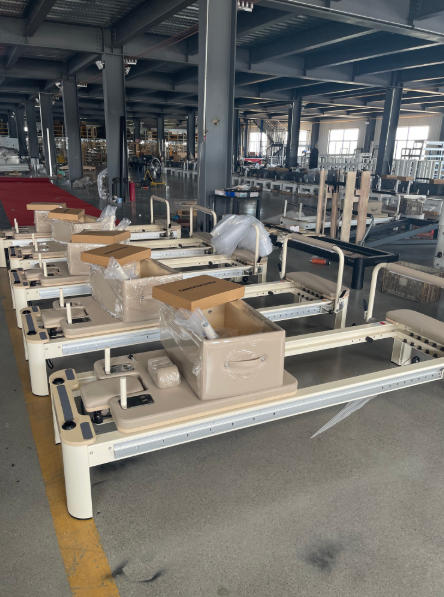
2. Don't Judge a Supplier by English Skills or Price
There's an old sourcing joke: if a Chinese salesperson speaks perfect English, they're probably working for a trading company.
The idea appeared in a Reddit discussion, although other users pointed out that many factories employ fluent English-speaking salespeople.
Response speed is equally misleading. In another buyer discussion, someone comparing three sample suppliers found the suspected trading companies easier to communicate with.
Price is no better as proof.
One buyer reported receiving a higher quotation after approaching the factory directly. A trading company buying in volume may receive better prices than a small customer.
When comparing Reformer factories, check the specifications, accessories, MOQ, packaging, and shipping terms behind each quotation. A cheaper machine may simply have different components.
These buyer experiences are individual accounts, not universal rules.
3. Test OEM Capability with Specific Reformer Questions
Almost every supplier claims to support OEM customization. Changing a logo or upholstery color tells you little about its manufacturing expertise.
Instead, ask about a structural detail.
For example, can the supplier replace a standard Footbar with a Full Track system? Would this require different brackets or frame modifications?
If you prefer an L-shaped carriage rail, ask whether it works with the existing rollers. For a Tower Reformer, ask how the attachment affects the frame connections.
A supplier familiar with production should explain what needs checking, even if an engineer must provide the final answer.
Be cautious when someone agrees to every modification without asking for drawings, measurements, or other details.
Most importantly, ask who approves the design: the supplier's own engineering team or an independent manufacturing partner?
This reveals more about production control than a simple "Yes, we customize."
4. Request a Live Factory Video, Not Just Promotional Footage
Factory photos and videos can be genuine without proving that the seller operates the facility.
Trading companies sometimes arrange visits to their partner factories. One buyer described meeting the actual manufacturer through a tour organized by a trading company.
For serious inquiries, request a live video call.
Ask to see the Reformer model being quoted, not just a showroom. A close-up of the carriage rollers, rail installation, or Footbar locking mechanism is more useful than a general factory introduction.
You can also send a reference code shortly before the call and ask the supplier to show it beside the equipment. This helps confirm that the demonstration is live.
If you visit the factory, check where assembly and testing take place. Then establish which registered company operates the workshop.
A real production tour confirms access to manufacturing activities. The seller's relationship with that factory still needs verification.
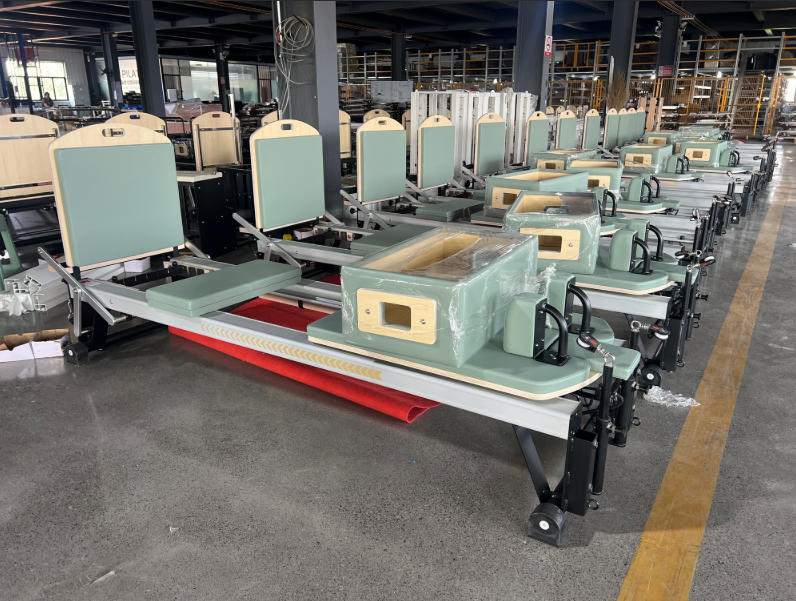
5. Use Samples to Check Production Consistency
A good sample does not guarantee a good bulk order.
One Reddit buyer described receiving satisfactory samples but poorer-quality products in subsequent orders.
Before approving a Reformer sample, confirm its rail design, spring configuration, upholstery, Footbar, accessories, and packaging.
If you request changes, ask how they will be recorded for production.
For example, a distributor may reserve a particular upholstery color for its product line. The supplier needs to retain that color reference and apply it consistently to future orders.
Once production begins, request relevant progress photos. For larger orders, a pre-shipment inspection can compare finished machines with the approved sample.
What matters is whether the supplier can turn your requirements into repeatable production.
6. Pay Attention to Small Customization and Packaging Requests
Production knowledge also appears in details buyers often overlook.
Some Pilates equipment importers specify the height of wooden supports beneath shipping crates to suit their unloading equipment.
Others need enough space inside the crate to remove a Reformer easily.
In one customer experience discussed during our research, Reformers from a previous supplier were packed so tightly that the crates had to be dismantled before the machines could be removed.
These requests require coordination between sales and production.
Ask whether the supplier can adjust the packaging and provide photos before shipment.
A manufacturer may handle these changes internally. A trading company may coordinate with its factory. Either arrangement can work, but the supplier should be clear about who implements the requirements.
7. Check the Company Behind the Quotation and Invoice
Before paying a deposit, check who you're actually buying from.
One buyer reported that a supplier changed the company name on its proforma invoice after nearly a year of cooperation.
This isn't necessarily suspicious. Some manufacturers use separate companies for export sales.
However, the names on the quotation, contract, and payment instructions should have a clear explanation.
For Chinese suppliers, request the registered company name and business license (营业执照). You can check registration information through the National Enterprise Credit Information Publicity System.
If the factory and seller have different names, ask whether they are affiliated businesses or independent companies.
Alibaba's Verified Supplier assessment reports may also provide information about business type, factory location, manufacturing equipment, and subcontracting.
Read the report rather than relying on the badge alone. Check which company and facility were assessed.
For substantial OEM orders, an independent factory audit can provide stronger confirmation.
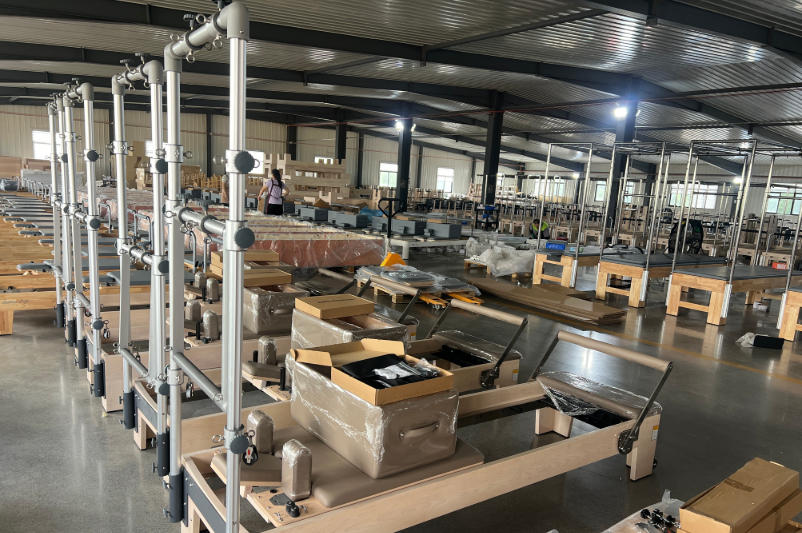
8. How to Make the Final Manufacturer vs. Trading Company Decision
After gathering the evidence, the distinction is relatively straightforward.
Direct manufacturer: The selling company operates the factory producing the Reformer, and its relevant manufacturing activities can be verified.
Manufacturer-affiliated export company: The seller and factory are separate but belong to the same verified business group.
Trading company: The seller purchases finished Reformers from an independently operated manufacturer and resells them.
Unverified supplier: The seller claims to manufacture the equipment, but its relationship with the production facility cannot be established.
Remember that these classifications can depend on the product. A company may manufacture its own aluminum Reformers while sourcing wooden models elsewhere.
And a trading company isn't automatically a poor choice. It may offer lower MOQs, consolidated shipping, or better communication and service.
For a studio buying a few machines, product quality and after-sales support may matter most. For distributors developing custom Reformers, direct manufacturing access can be more valuable.
Conclusion
No single trick can reliably identify a Pilates Reformer manufacturer. Fluent English, low prices, repeated photos, and factory videos are useful clues, but not proof.
Start with what you naturally encounter when buying: quotations, product details, technical questions, samples, and production updates.
Before placing a significant order, confirm who manufactures the equipment and how that factory is related to the company selling it.
The most useful question isn't simply "Are you a factory?"
It's "Who makes my Reformers, and what is your relationship with that manufacturer?"