
How to Develop a Custom Pilates Reformer from Concept to Production
Developing a custom Pilates Reformer often begins with a simple observation about the market.
One of our customers noticed that full-track Reformers were largely absent from their local market. Rather than introduce another conventional model, they wanted to offer something different. The decision created an opportunity, but it also raised practical questions about the frame, footbar mechanism, component compatibility, and manufacturing cost.
This is where custom product development begins. The customer knows what they want to bring to the market, while the manufacturer must determine how to build it.
Between that initial idea and a production-ready Reformer lie several decisions that can significantly change the final product.
1. Understanding the Market Before Developing a Reformer
A custom Reformer needs a clear purpose. That purpose may come from an underserved product category, a studio's teaching requirements, or a particular customer group.
For a distributor entering a competitive market, offering a different adjustment system can be more meaningful than changing the upholstery color on an existing model. Studio owners may have other priorities. They might need equipment that accommodates different training styles, fits a limited floor area, or complements their interior design.
The manufacturer's early discussions therefore focus on the product's intended use rather than presenting every available customization option.
A commercial studio Reformer, for example, may need frequent footbar adjustments and easily accessible components for cleaning. A model intended for a multipurpose room may place greater importance on upright storage or mobility.
These requirements help establish the basic product specifications: dimensions, functionality, appearance, target price, and expected order volume.
They also determine whether an existing Reformer can be adapted or whether the project requires substantial new engineering.
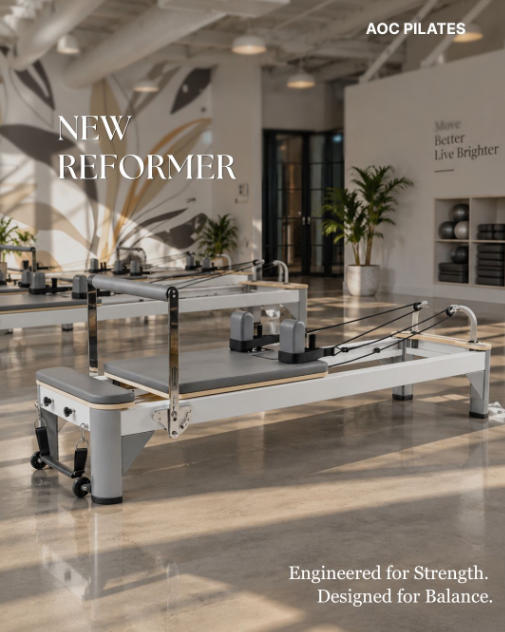
2. Building the Custom Design Around an Existing Reformer Platform
Developing a custom product does not necessarily mean designing every component from scratch.
A manufacturer may already have an established frame, carriage, spring system, and pulley arrangement. Where those components meet the customer's requirements, retaining them can reduce development work and simplify future maintenance.
The first engineering decision is identifying what can remain unchanged. If the product brief can be met through existing private-label options, there may be little reason to redesign a proven frame or carriage.
Frame material is one consideration. Hard maple and oak offer different natural finishes and woodworking requirements, while aluminum and carbon steel involve different fabrication methods.
An aluminum frame may use extruded profiles and machined connectors; a wooden frame requires appropriately prepared timber, joints, and surface finishing.
Frame height is another choice that affects more than appearance. Low-leg and high-leg versions place the carriage at different heights, which can influence access, exercise positioning, and equipment stability.
Some customers also want the option to add a Tower later. In that case, the frame needs compatible mounting positions and connections capable of handling the intended attachment. These details should be incorporated into the design before machining begins.
The aim is to preserve reliable parts of the existing platform while concentrating engineering work on the changes the customer actually needs.
3. Engineering the Features That Define the Custom Reformer
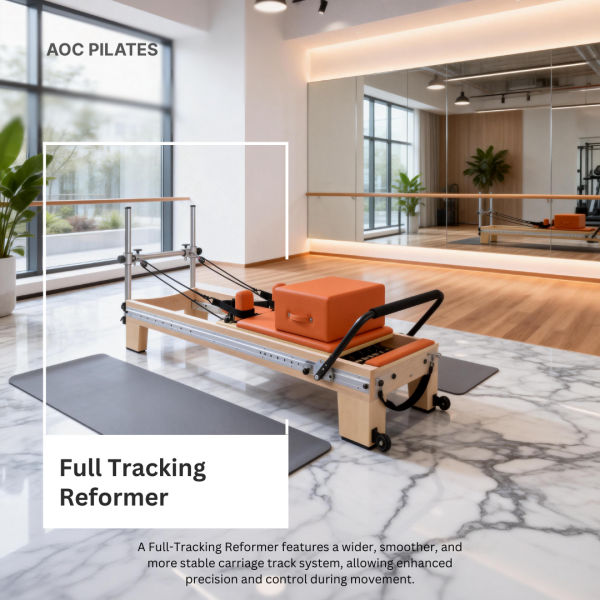
For the customer interested in a full-track Reformer, the main development work concerns the footbar adjustment system.
Unlike a conventional arrangement with a limited number of footbar positions near one end, a full-track design allows the footbar assembly to move along a much greater length of the frame.
That additional adjustment range requires a suitable sliding mechanism, secure locking positions, and enough clearance for the carriage throughout its movement. The footbar must also remain stable when loaded.
These details need to be settled together. Changing the track or locking arrangement without considering the supporting frame can create problems during assembly or use.
The footbar adjustment track should not be confused with the rails that carry the moving carriage.
Carriage rails present a different engineering challenge. Depending on the design, they may be made from stainless steel or aluminum and manufactured in different cross-sectional shapes.
In another customer project, the choice of an L-shaped rail was driven by cleaning requirements. The customer wanted a rail profile that would be easier for studio staff to wipe down during routine maintenance.
This is a useful example of how product development responds to everyday studio operation. A rail must guide the rollers accurately, but its shape also affects whether dust and debris collect in areas that are difficult to reach.
Choosing an L-shaped section therefore involves examining roller contact, lateral guidance, mounting points, and cleaning access together.
The same principle applies to larger structural changes. A foldable Reformer requires hinges and locking mechanisms that maintain frame alignment during use. An upright-storage model needs suitable support points and a safe way to move the machine into position.
Such features are not simply accessories added at the end. They can alter the frame construction, component layout, and manufacturing process.
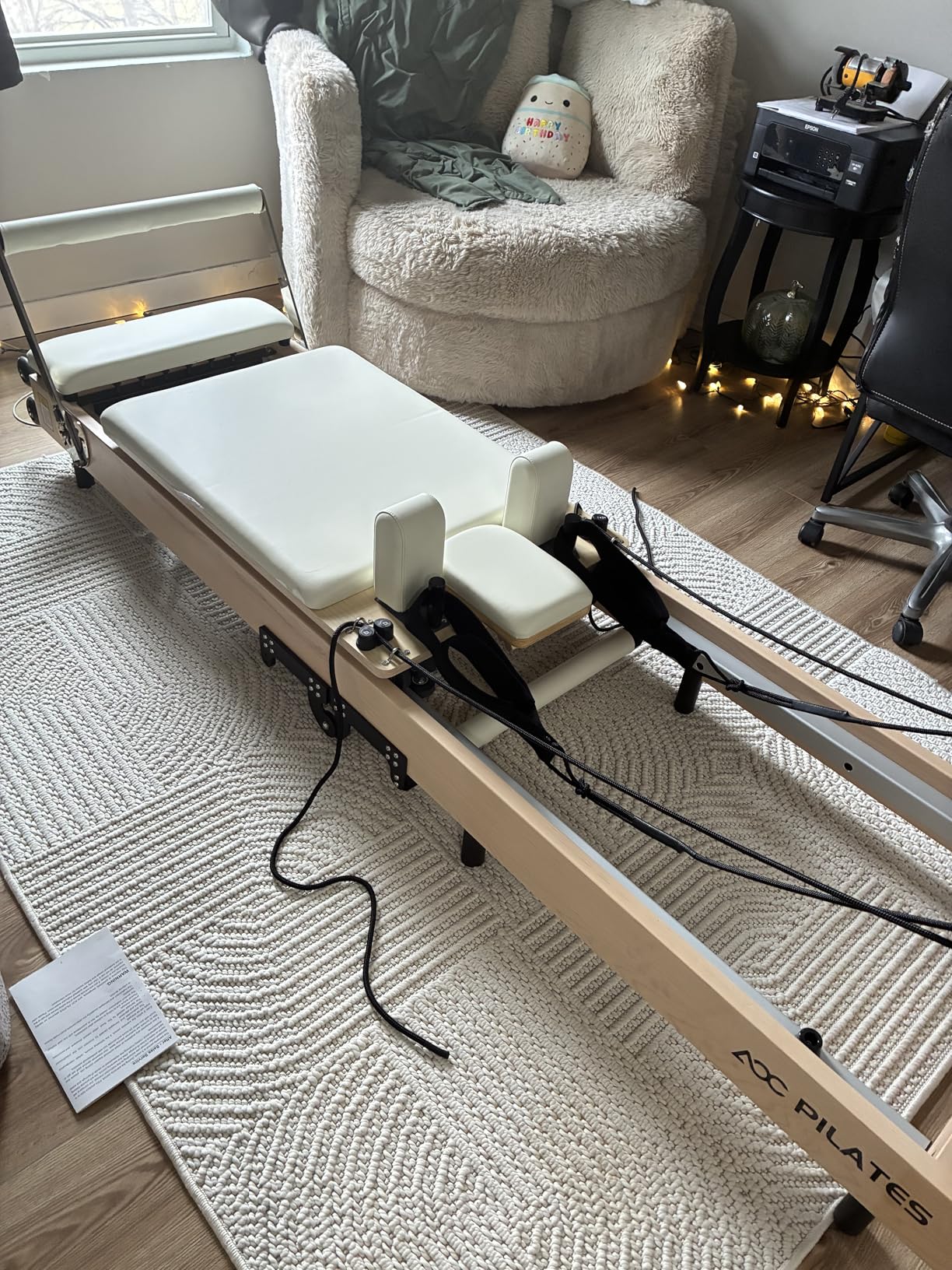
4. Developing Upholstery That Fits the Product and Studio
Once the main mechanical design is established, the Reformer begins to take on its intended visual character.
For many studio customers, equipment is part of the interior rather than an isolated purchase. Upholstery colors, frame finishes, and textures are often selected to complement the space and the brand.
Some customers prefer neutral shades with natural wood, while others choose stronger colors such as burgundy. The final selection is usually more convincing when viewed as a physical material sample rather than a color on a computer screen.
Material choice requires similar care.
PU synthetic leather and microfiber-based synthetic leather can have different backing structures, surface textures, and handling characteristics. Within either category, customers may choose smooth finishes, fine-grain embossing, or more pronounced textures.
The carriage construction also affects the upholstery work. A partially upholstered design leaves more of the supporting structure exposed, while full upholstery extends the covering around more of the carriage perimeter.
Underneath, high-resilience foam, EVA, or a combination of materials provides cushioning. Foam thickness, firmness, and placement need to suit the intended surface.
Stitching is specified as part of the design, including seam positions, thread color, and whether single or double topstitching is used.
At this stage, approved swatches and technical specifications establish the intended appearance. Whether the finished upholstery meets those expectations can only be properly assessed on a physical sample.
5. Turning Engineering Drawings into a Working Prototype
With the key specifications agreed, engineers prepare the CAD models, component drawings, and initial bill of materials.
The design is then reviewed against the factory's production capabilities. A drawing that looks right on screen still needs to fit the practical steps of Reformer manufacturing, from machining and assembly to final inspection.
Existing components may be suitable for immediate use, while a new adjustment mechanism may require machined brackets or specially designed locking parts. A custom aluminum profile could involve extrusion tooling, and a revised carriage design may call for changes to its supporting structure.
These decisions affect both the prototype and the eventual production cost.
The first working sample brings the different components together. The frame is manufactured, mechanical parts are assembled, and the carriage is fitted to its running rails. The selected upholstery materials are then applied to the prepared deck and supporting components.
At this point, the customer can evaluate a complete machine rather than a rendering.
Footbar positions can be checked in practice. The carriage can be moved through its full travel, while the Tower connections or storage features, where specified, can be examined directly.
The physical sample also reveals details that may not have been apparent in the drawings.
6. Using Prototype Feedback to Improve the Reformer
One customer inspecting a Reformer sample noticed that the upholstery padding was uneven.
The chosen material and general appearance were not necessarily the problem. The concern was how the finished surface had been filled and covered.
Several manufacturing details may contribute to this kind of issue, including foam cutting accuracy, layer positioning, bonding, and tension in the upholstery cover. Identifying the cause requires examining the actual component rather than making a cosmetic adjustment.
The relevant process can then be revised and checked against the customer's expectations.
Mechanical development follows a similar approach.
A full-track footbar must move between its intended positions and lock reliably. A new carriage rail needs to provide consistent movement while meeting the customer's maintenance requirements. Folding mechanisms and removable Tower connections require their own functional and structural checks.
Testing should reflect what has changed from the original product platform. A new mechanism cannot automatically rely on the validation performed for a different design.
When modifications are agreed, the corresponding engineering drawings, material specifications, and sample records must be updated.
The approved prototype becomes the reference for the next stage, but its specifications must also be documented so the result can be reproduced.
7. Preparing the Custom Reformer for Mass Production
A successful prototype is an important milestone, but producing one machine is different from manufacturing a consistent batch.
Before production begins, the factory finalizes the drawings, bill of materials, component specifications, upholstery samples, and assembly requirements. Any custom tooling or fixtures must also be prepared.
This is where the depth of customization has a direct effect on cost and minimum order quantities.
Changing an upholstery color or applying a private-label logo to an established model may require relatively little new tooling. Developing a custom track mechanism, frame extrusion, or folding structure may involve additional engineering work and dedicated production equipment.
The customer and manufacturer therefore need to distinguish development charges from the cost of each finished Reformer.
For substantially modified products, a pilot production run can help confirm that the approved design can be assembled repeatedly under normal factory conditions.
Inspection should pay particular attention to the customized components. Footbar locking positions, carriage movement, rail alignment, upholstery consistency, and frame connections must match the agreed specifications.
The same requirements carry into the final order, including selected finishes, accessories, branding, and protective packaging.
Once production procedures are established, subsequent orders can follow the approved design without depending on the adjustments made to the original prototype.
Developing a custom Pilates Reformer is ultimately a process of narrowing an idea into a workable product. A market opportunity determines the direction, engineering resolves the structure, and prototype testing reveals what still needs attention.
When those decisions are carried through into production, the result is more than a customized sample. It is a Reformer that can be manufactured consistently for the market it was designed to serve.