
Wholesale Pilates Equipment: A Complete Buying and Supplier Guide
A new Pilates studio may buy most of its equipment in one order before opening, then keep those machines for years. A distributor may place orders every few months. Both need more than a competitive quotation: they need the specified equipment to arrive in good condition, work reliably, and remain serviceable after installation.
The difference between suppliers often appears in ordinary situations: a missing accessory, an unexpectedly high freight bill, or a roller that needs replacing long after the original purchase. Those problems are easier to avoid when the purchasing process is clear from the beginning.
1. How Wholesale Pilates Equipment Orders Work
A studio owner does not always arrive with a complete equipment list. Some customers have a floor plan and a budget but are still deciding which machines to purchase. An experienced manufacturer can help by looking at the local Pilates market, the studio's intended classes, nearby competitors, and the equipment configurations customers are familiar with.
For example, a studio focused on group Reformer classes may need a different setup from one offering private sessions with Tower work. In a multipurpose space, equipment that can be moved or stored upright may be more practical than fitting in the maximum number of machines.
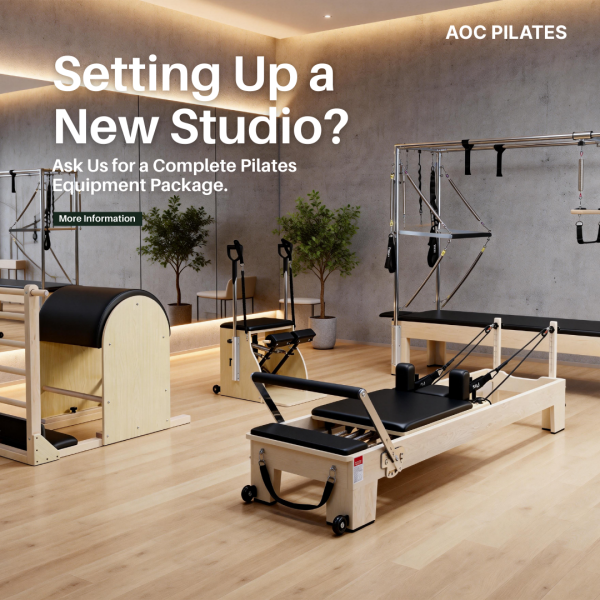
From there, the manufacturer can recommend a suitable combination of Reformers, Towers, Chairs, and accessories, taking the available space and budget into account. Only after the equipment plan is agreed do the exact models, quantities, finishes, and delivery requirements need to be finalized.
Distributors usually ask for a different level of detail: unit prices at several quantities, mixed-model orders, private-label options, packing dimensions, and lead times for repeat purchases.
Once the configuration is agreed, the pro forma invoice should match it. A Sitting Box, Jumpboard, or extra spring set cannot be left to assumptions about what a “complete Reformer” includes. The buyer should also confirm the deposit, balance-payment point, production schedule, and arrangements for sample approval or pre-shipment inspection.
These details may seem administrative until a shipment arrives with the wrong accessories or too late for a studio opening.
2. Buying from a Factory, Dealer, or Purchasing Agent
Not every customer purchases directly from a factory. A studio may prefer a local dealer that offers demonstrations, installation, and nearby service. Importers and private-label brands often work with manufacturers to control product configurations and later orders.
Trading companies can also be useful when several equipment categories come from different producers, provided buyers can confirm who actually makes the Reformers and who will handle any quality issues.
Some overseas buyers ask their freight forwarder to help source the equipment. A forwarder with purchasing services may contact factories, compare offers, coordinate payment, collect products from multiple suppliers, and combine them into one shipment. This can simplify an order covering Reformers, Chairs, Barrels, and accessories.
The responsibilities still need to be clear. Is the forwarder acting only as a shipping agent, as a purchasing agent, or as the actual seller? Who approves the product specification, receives payment, handles defects, and honors the warranty?
Direct access to a manufacturer's engineering and production teams can be valuable when a component fails or a model needs updating. An established dealer with local technicians may be equally effective at solving a studio's immediate problem. What matters is whether the promised support exists.
3. Assess Commercial Pilates Equipment Quality
A Reformer that photographs well is not necessarily ready for daily studio classes. Buyers should verify that the model is intended for their usage level, then inspect an actual sample where possible.
The carriage should move along the full rail length without catching or excessive sideways play. Footbar positions should lock correctly, spring connections should be secure, and frame joints and exposed edges should be properly finished. Upholstery needs more than the correct color: padding should be even, seams straight, and corners neatly wrapped.
Material labels alone are a poor shortcut. Aluminum and stainless-steel rails can both work well, but roller fit and alignment determine much of the carriage's movement. Likewise, an expensive covering cannot compensate for uneven foam beneath it.
For a bulk order, the approved sample should be backed by written specifications. The real test when comparing factories is how reliably each one can reproduce those specifications from machining through final inspection.
A factory needs checks during machining, assembly, and finishing to reproduce the same result across the shipment. Independent inspection before dispatch may be appropriate for larger orders, but buyers should also agree in advance on how rejected units will be corrected.

4. Check Testing and Import Documents
Certificates should relate to the actual model and destination market, not just appear as logos in a catalogue.
ISO 9001 concerns a manufacturer's quality management system. ISO 20957-1:2024 covers general safety requirements and tests for indoor stationary training equipment, including equipment used in studios; the appropriate assessment depends on the product. In the EU, CE marking is required only where specific legislation mandates it, not automatically for every non-electric Reformer.
A supplier should be able to discuss relevant test evidence, product identification, instructions, and safety information. Importers also need to understand their own legal responsibilities; delegating shipping to a forwarder does not transfer those obligations.
5. Compare Wholesale Pricing and Shipping Costs
A useful price comparison starts with identical equipment configurations. One quotation may include a Sitting Box, Jumpboard, additional springs, and export packaging; another may charge separately. Special upholstery, private-label packaging, or a modified frame can also affect minimum order quantities and production costs.
Next comes the freight calculation. Reformers are bulky, so the number of cartons, total cubic metres (CBM), gross weight, and packing method can change the shipping bill substantially. A studio must also establish whether the quotation covers delivery to the building, unloading, or installation; these are different services.
This is an area where an experienced export factory can contribute more than a packing list. The nearest departure port is not always the least expensive. For an order of six to twelve Reformers, the factory and the buyer's forwarder can compare different loading ports, sailing schedules, inland trucking, terminal charges, and less-than-container-load versus full-container options. On certain routes, the difference between complete shipping quotations could exceed $1,000, though that is a possibility rather than a standard saving.
The comparison must include charges at both ends and onward delivery, not only the advertised ocean rate. A cheaper sailing that requires extra trucking or causes delays may cost more overall. The port and delivery point should also match the agreed trade terms; DDP and FOB, for example, assign different delivery and risk responsibilities.
The meaningful number is the cost of getting the correct equipment to the place where it will be used or sold.
6. Evaluate Spare Parts and Remote Technical Support
After delivery, the most frustrating problems are sometimes small ones. A studio hears a new noise when its carriage moves, but the local dealer cannot tell whether the rollers need adjustment or replacement. The machine may be out of use while the customer waits for an answer.
A manufacturer with technical support staff can review the equipment model, photographs, and a short video, then help identify whether the issue involves rail cleaning, roller alignment, a worn bearing, or another component. For maintenance that can safely be performed on site, instructions or a video call may let the studio or dealer complete the work without shipping the machine back. Structural damage and unreliable locking mechanisms, however, require the equipment to be taken out of service and assessed by qualified personnel.
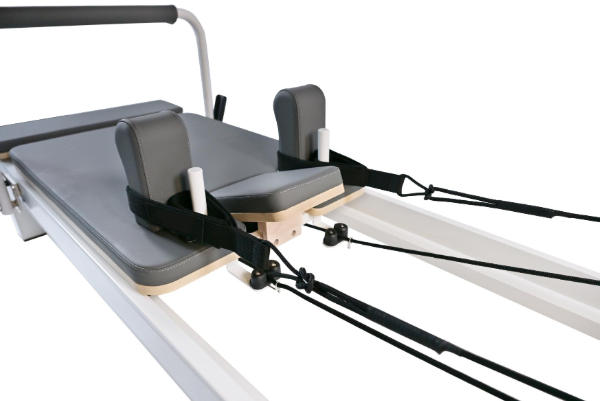
The next question is whether the supplier can provide the right part. Springs, ropes, pulleys, rollers, and straps should be identifiable by model and, where necessary, production version. A new roller assembly might not fit a Reformer made three years earlier. Without records of component changes, even a supplier with parts in stock may send the wrong one.
Warranty coverage should also be discussed by component. Frames, upholstery, springs, and wear items may carry different terms, and the parties need to know who pays for replacement shipping or labor. For distributors, a modest stock of frequently needed parts can spare customers a long international delivery wait.
Studio owners may not buy another complete Reformer for years, but they still need practical assistance throughout the equipment's working life.
7. Consider Future Orders and Product Improvements
When an independent studio opens a second location, it may want the same carriage height, frame finish, upholstery, and spring configuration as its first studio. A supplier that retains the original specifications can help reproduce that setup, even if the catalogue has changed.
Distributors face a different challenge: keeping inventory available while responding to customer feedback. If several studios report premature roller wear or an awkward footbar adjustment, a factory with engineering capability can investigate the cause, test an improvement, and incorporate it into later production.
Updates need discipline. The manufacturer should record what changed and whether new components fit older machines. Otherwise, a product improvement can create a spare-parts problem for the very customers it was intended to help.
One studio may place a major equipment order only when it opens or expands; a distributor may reorder regularly. Either way, the supplier's ability to maintain machines already sold is as relevant as its ability to ship the next batch.