
How to Choose a Reliable Pilates Equipment Manufacturer
Finding a Pilates equipment supplier is relatively easy. Finding one that can deliver consistent quality, meet production deadlines, and support your business after the sale is much harder.
This distinction matters particularly for importers and distributors sourcing from China. Two factories may offer nearly identical Reformers at very different prices, yet the differences in materials, production control, component quality, and after-sales support may only become apparent after the equipment reaches your warehouse.
A lower quotation does not necessarily mean a better deal. The real challenge is identifying a manufacturer whose capabilities match your product requirements and whose production standards remain consistent as order volumes grow.
1. Start With the Equipment You Intend to Sell
Before approaching manufacturers, determine what kind of Pilates equipment your customers actually need. A supplier specializing in affordable home Reformers may not have the engineering capabilities or production processes required for commercial studio equipment.
For commercial buyers, frame durability, spring performance, carriage movement, and ease of maintenance deserve particular attention. Home-use products, on the other hand, may place greater emphasis on compact dimensions, folding mechanisms, appearance, and shipping efficiency.
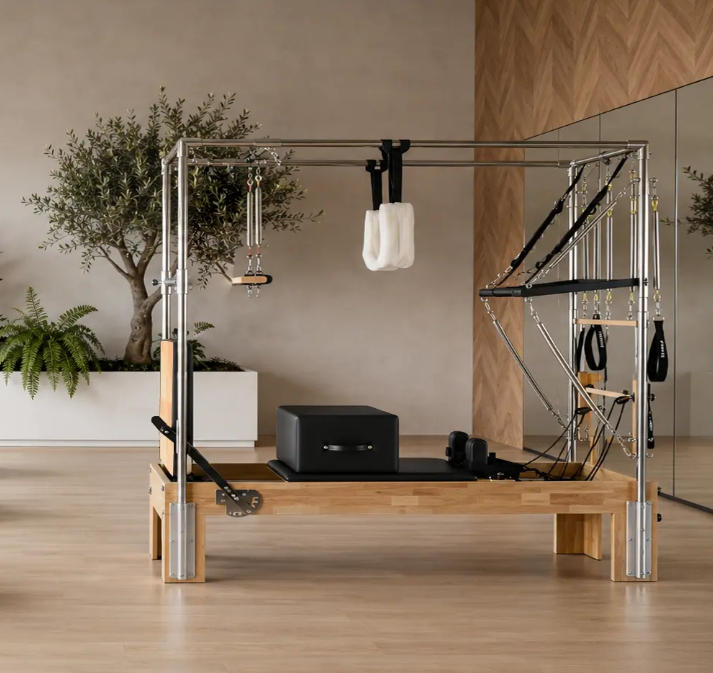
Your product range also affects supplier selection. If you plan to sell Reformers, Cadillac Tables, Pilates Chairs, and Barrels under one brand, look for a manufacturer with experience across these categories rather than one that simply assembles products from different sources.
Define your target market, expected order volume, technical specifications, and customization requirements before requesting quotations. This gives you a consistent basis for comparing suppliers.
2. Look Beyond the Factory's Location and Advertised Production Capacity
China has several established fitness equipment manufacturing clusters. Shandong and Jiangsu are useful starting points for sourcing commercial Pilates equipment, while Zhejiang and Guangdong offer suppliers across home fitness products and related accessories.
However, being located in an established manufacturing region does not automatically make a factory reliable.
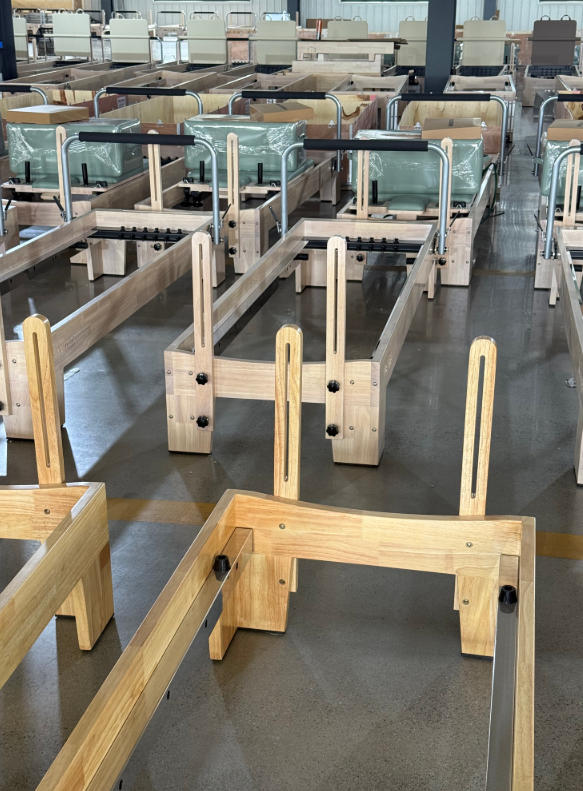
What matters more is the work the supplier actually controls and who manufactures the Reformers. That distinction helps buyers understand which company is responsible for technical specifications and product quality.
Some manufacturers handle metal fabrication, welding, finishing, upholstery, and final assembly in-house. Others outsource several of these operations and focus mainly on assembly and export. Neither model is necessarily unsuitable, but the difference affects production coordination, quality consistency, and delivery reliability.
When visiting a factory, pay attention to its actual production activities rather than its showroom. Ask who manufactures the frames, where the springs come from, whether upholstery is produced internally, and how outsourced components are inspected.
A factory with fewer in-house processes can still be a good partner if it has qualified subcontractors and effective quality controls. What you want to avoid is a supplier that cannot explain who makes its products or who is responsible when a component fails.
3. Examine the Components That Determine Equipment Performance
A Pilates Reformer may look well finished, but its long-term performance depends on components that are not always obvious in product photographs.
The frame is the starting point. Wooden Reformers require consistent timber quality, controlled moisture content, and reliable joints. Aluminum and steel models depend on appropriate material specifications, structural design, and accurate fabrication. Ask for material details rather than accepting descriptions such as premium wood or heavy-duty metal.
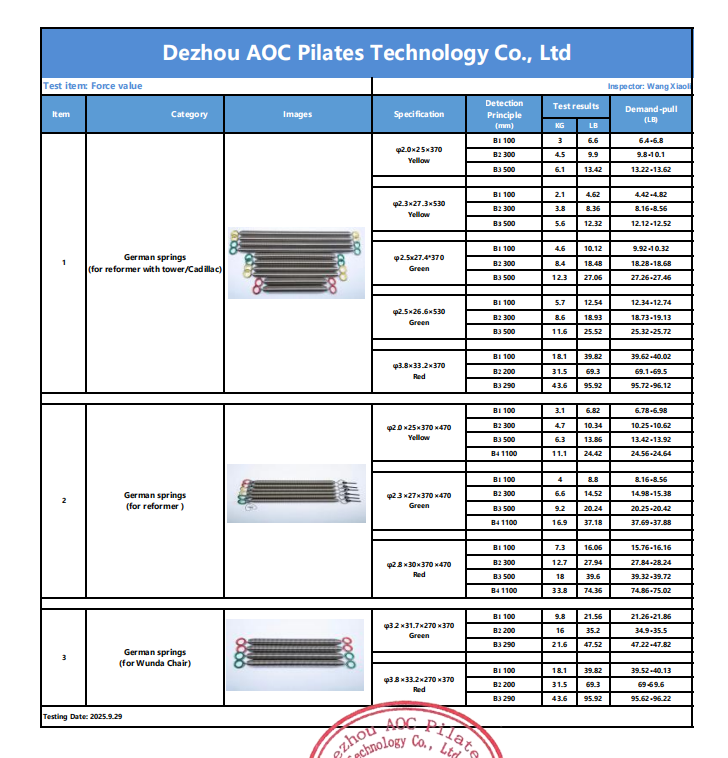
The spring system deserves even closer attention. Springs determine resistance, and their performance can change through repeated use. Request information about spring materials, resistance measurements, fatigue testing, and recommended replacement intervals. Two springs with the same color are not necessarily equivalent in resistance or durability.
The carriage and rail system is another important indicator of engineering quality. A well-made Reformer should move smoothly without excessive noise, vibration, or lateral movement. Poor alignment, inconsistent rollers, and low-quality bearings can affect the training experience long before the frame shows visible damage.
Finally, examine ropes, pulleys, straps, footbars, and upholstery. These parts experience repeated movement and physical contact. Weak stitching, unreliable locking mechanisms, or upholstery that deteriorates under frequent cleaning can create recurring maintenance costs.
Rather than asking whether a manufacturer uses high-quality materials, request the actual specifications and test results for the components that matter.
4. Treat Certifications as Evidence, Not Marketing Claims
Certifications are useful when they demonstrate that a manufacturer follows recognized quality management practices or that a product has undergone relevant testing. They are less useful when suppliers display logos without explaining what was certified.
ISO 9001, for example, concerns a company's quality management system. It does not independently establish that every Pilates Reformer produced by that company meets a particular safety standard.
For stationary training equipment, ISO 20957-1:2024 is an important reference for general safety requirements and testing methods. ASTM F2276 and ASTM F2571 are also relevant references when assessing fitness equipment design and performance testing, subject to product applicability.
For European distribution, do not simply ask whether a supplier has CE certification. First determine which EU legislation applies to the specific product. CE marking is mandatory only for products covered by legislation requiring it. Where applicable, request the relevant conformity documentation and supporting technical records.
For US imports, identify the applicable federal and state requirements based on the product's materials, design, and intended use.
Most importantly, check whether test reports relate to the exact model you intend to purchase. A report for a different product, an unrelated component, or an outdated design offers limited assurance. Verify the testing laboratory, report number, test scope, and relevant standard.
5. Find Out How the Factory Keeps Production Consistent
A factory may produce an excellent sample and still struggle to maintain the same quality across a large order. This is one of the most important risks for importers.
Ask how incoming materials are inspected, how production defects are identified, and who approves finished equipment before shipment. The manufacturer should have documented procedures covering key production stages, not simply rely on workers checking products by experience.
Component traceability also matters. If a spring, bearing, or other critical part needs replacement, the factory should be able to identify its specification and supplier.
Before mass production, approve a final sample and record its specifications. This becomes the reference for subsequent orders. Any change to critical materials, dimensions, or components should require your written approval.
For distributors building a long-term brand, production consistency is often more valuable than a small reduction in unit price. A single shipment with inconsistent products can create customer complaints, replacement costs, and damage to your reputation.
6. Evaluate OEM and ODM Capabilities Before Building Your Brand
Not every factory offering private-label services has genuine product development capabilities.
Basic OEM customization usually includes logo placement, upholstery colors, frame finishes, and packaging. These services may be sufficient for distributors who want to sell existing equipment under their own brand.
ODM involves more extensive development. This can include modifying product structures, selecting materials, developing prototypes, and adjusting equipment to meet specific market requirements.
If product differentiation is important to your business, ask to see examples of previous customization projects. Find out whether the factory has its own engineering team, can provide technical drawings, and can manage prototype revisions.
Intellectual property should also be addressed early. Product drawings, custom molds, brand assets, and exclusive designs need clear contractual ownership and usage terms. Regional distribution rights should specify the territory, product range, duration, and sales commitments.
7. Compare the Real Cost of Working With Each Supplier
The cheapest factory quotation can become the most expensive purchasing decision if products require frequent repairs or arrive with inconsistent quality.
For importers, the relevant figure is the total landed cost, not simply the FOB price. Freight, insurance, customs duties, clearance, inland transportation, and potential replacement costs all affect the final margin.
Warranty terms deserve particular scrutiny. A manufacturer advertising a five-year frame warranty may offer much shorter coverage for springs, bearings, upholstery, and moving components. Compare the actual coverage and exclusions rather than relying on the headline warranty period.
Spare parts availability is equally important. Ask how quickly the factory can supply replacement springs, ropes, rollers, pulleys, and other frequently used components. For commercial customers, equipment downtime can directly affect studio operations.
Before choosing a supplier, calculate the likely maintenance and replacement expenses over the expected product lifecycle. A slightly higher purchase price may be justified if it comes with better durability and more dependable after-sales support.
8. Test the Supplier Before Committing to Bulk Orders
Promises are not enough to judge a supplier. When comparing Reformer factories, apply the same standards to samples, production records, and after-sales commitments.
Start with a live video inspection or factory visit. Ask the supplier to show its actual production facilities, current orders, assembly operations, and finished goods. Verify that the business entity, factory address, and contractual seller are consistent.
Next, order samples from your shortlisted manufacturers. Test the Reformer under realistic operating conditions. Pay attention to carriage smoothness, spring resistance, frame stability, footbar locking, rope adjustment, and unusual noise.
Do not rely on a brief showroom demonstration. If possible, involve an experienced Pilates instructor in the evaluation.
Once a sample passes, place a small trial order. This reveals whether the manufacturer can reproduce the approved specifications across multiple units and deliver on schedule.
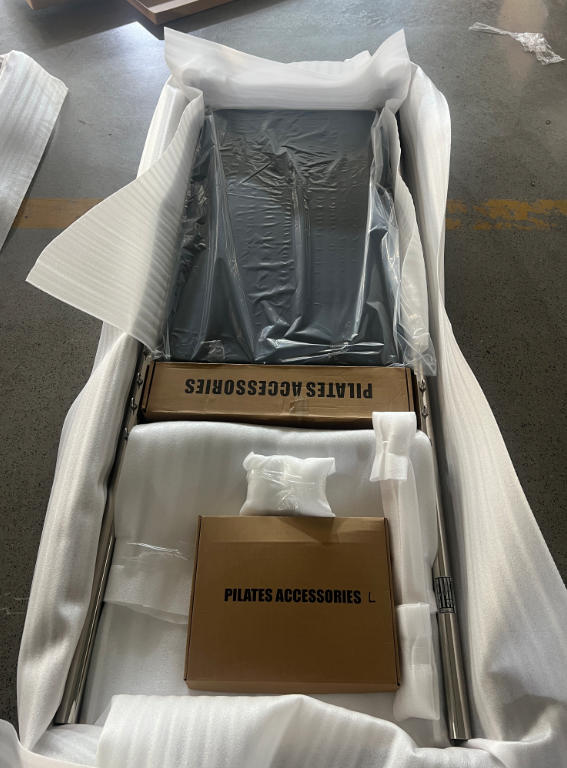
For larger shipments, arrange an independent pre-shipment inspection. Agree on inspection criteria before production begins, including product appearance, dimensions, functionality, packaging, and any critical safety requirements.
9. Watch for Warning Signs Before Signing the Contract
Some supplier problems are visible before the first payment.
Be cautious if a company refuses to provide verifiable registration information, cannot explain its production arrangements, or offers technical specifications only after repeated requests. Missing test reports, inconsistent company details, and unexplained differences between sample and quotation specifications also deserve attention.
Extremely low prices should prompt questions about materials, component substitutions, and production processes. They are not proof of poor quality, but the supplier should be able to explain the cost difference.
Payment arrangements and contractual responsibilities should be equally clear. Avoid paying an unverified supplier in full upfront. Specify product specifications, delivery deadlines, inspection rights, warranty coverage, and remedies for non-conforming products in the purchase agreement.
A manufacturer that welcomes reasonable technical questions and independent inspections is generally easier to work with than one that relies entirely on sales promises.
Conclusion
Choosing a reliable Pilates equipment manufacturer requires looking beyond product photographs, factory claims, and attractive quotations. The most important questions concern what the factory actually produces, how it controls critical components, whether its products meet applicable safety requirements, and how it handles problems after delivery.
For importers and distributors sourcing from China, a manufacturer with proven production capabilities, consistent quality control, transparent documentation, and dependable spare parts support is a stronger long-term partner than a supplier competing on price alone.
The objective is not simply to find a factory that can fulfill your first order. It is to find one that can support your business through repeat orders, product development, and changing customer requirements.