
What to Consider Before Your First Private Label Pilates Equipment Order
A first private-label order is often treated as a purchasing event: select a reformer, approve a sample, pay a deposit, then arrange shipment. In practice, it is the first test of a business model. It reveals whether the manufacturer can reproduce the product, whether the importer understands its costs and whether the end customer receives the experience being advertised.
The strongest approach is to work backward from the completed sale. Imagine a studio owner has purchased six reformers, the equipment is installed, and one carriage needs a replacement part. What must have been decided at the factory for the brand to deliver, identify and support those six machines correctly? Those decisions belong in the first purchase order—not in a conversation after something goes wrong.
1. Fix the Customer and the Exact Product Offer
Before contacting factories, decide whether the product is for studios, homes, trainers or a dealer network. Intended use changes appropriate dimensions, accessories, durability expectations and warranty language.
A useful distinction appears in Merrithew's product range. Its At Home SPX is positioned for domestic use, while the V2 Max is intended for continuous studio use and offers different features and upgrades. Merrithew's warranty explicitly excludes commercial operation of the At Home SPX in specified facilities. These are brand-specific rules, but they illustrate why “professional quality” cannot substitute for a defined use category.
Write down the main buyer, intended activity, destination country, target net selling price and the exact bundle they will receive. Does the reformer include a jumpboard, sitting box, ropes, straps and assembly tools? Are the accessories sold individually or as one kit? A brand cannot compare supplier quotes until it has defined the same product for everyone.
Avoid launching too many configurations merely because the factory has them. A first order of one carefully selected platform usually tells a young brand more about demand than scattered orders across five models.
2. Make the Approved Sample Part of the Commercial Agreement
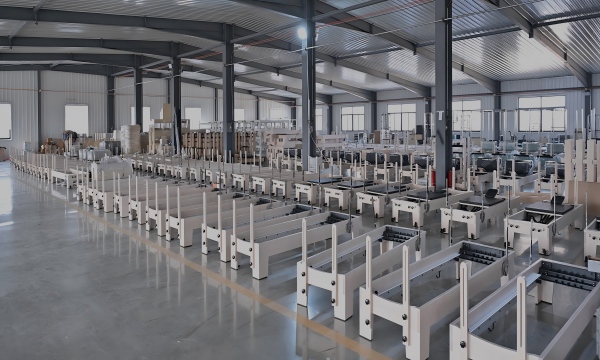
A sample is useful only when it represents the units that will actually ship. A showroom machine may have upgraded upholstery, special wheels or accessories not covered by the price quotation.
Create a sample-approval record linking the model to the production specification. Include dimensions, spring arrangement, adjustment mechanisms, finish, accessories, logo placement and packing. Record every difference between the sample and proposed production. The factory should not quietly substitute a different roller or spring because the original component is temporarily unavailable.
Evaluate the sample in realistic use. Instructors can assess the adjustment sequence and full carriage travel; the team receiving equipment can evaluate the assembly guide and packing. Record objective failures separately from personal preferences. “Footbar does not lock in its stated position” is an actionable finding; “feels premium” is not.
An approved sample should be tied to a specific product revision rather than a photograph. Even upholstery and logo choices need clear references so the factory can reproduce the agreed appearance alongside the mechanical specifications.
Then refer to that revision in the order, production inspection and spare-parts list. This is what makes a second order comparable to the first.
3. Understand the Real Commitment Behind the MOQ
Minimum order quantity is usually discussed as a price issue. It is also an inventory and cash-risk issue. A factory may offer a lower unit price at 50 machines, but a new brand might sell only 15 in the first quarter.
Build a conservative financial model using the expected net selling price and the full cost of delivering a usable machine. A hypothetical $950 factory unit cost can become $1,200 after freight and import charges, then $1,470 after local delivery, sales-channel expense and an allowance for after-sales support. A $1,900 selling price leaves $430 per unit to contribute to overhead and profit. These are illustrative numbers, not market quotations.
Next model payment timing. The deposit may be due before production, the balance before dispatch, and customs and local transport charges before the final customer pays. An order with attractive nominal margins can still strain cash if inventory moves slowly.
Ask which minimums apply to the whole order and which apply separately to upholstery colors, packaging runs or custom components. These details often explain why an apparently modest customization produces a much larger financial commitment.
4. Specify What Must Be Checked Before Shipment
Your first order should establish a repeatable inspection plan, not a one-time visit to see finished machines. Define which characteristics are checked on all units and which may be checked through an appropriate sampling procedure.
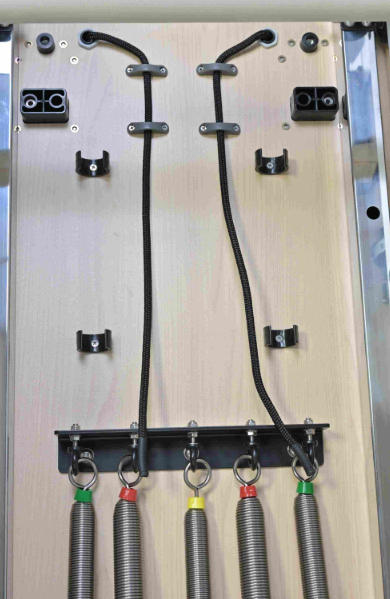
Focus on the actual product promise: correct springs and hardware, secure adjustments, carriage operation, dimensions against the approved design, finish, complete accessory kits and protective packing. Define how an inspector records results and what happens if a critical problem is discovered.
ISO 2859-1:2026 provides attribute-sampling schemes for lot inspection. It does not say that every product in an accepted lot is defect-free, nor does it replace design validation. The inspection method should be selected according to the feature and its consequences.
Include a written correction and reinspection process. If several machines fail a specified adjustment check, can the factory contain the affected batch, determine the cause and show that the repair works? Do not wait until the shipment is packed to negotiate this.
5. Separate the Factory Schedule From the Customer Promise
A factory completion date is not an arrival date. Buyers should settle the shipping arrangements before promising a delivery date to a studio or dealer.
Production, export handling, sea or air freight, customs clearance and local delivery all take time, and each can involve a different contractor.
Ask the manufacturer for realistic milestones: final sample approval, materials confirmed, production start, inspection, packing and release. Clarify which event starts the promised lead time. Artwork approval delayed by a week should not silently turn into an unexplainable production delay.
Agree on the Incoterms rule, edition and named place. For containerized cargo, the ICC provides guidance explaining the division of transport responsibilities and risk. Neither a quoted trade term nor an international freight booking automatically includes customs brokerage or assembly at the destination.
6. Decide What Happens After the Truck Arrives
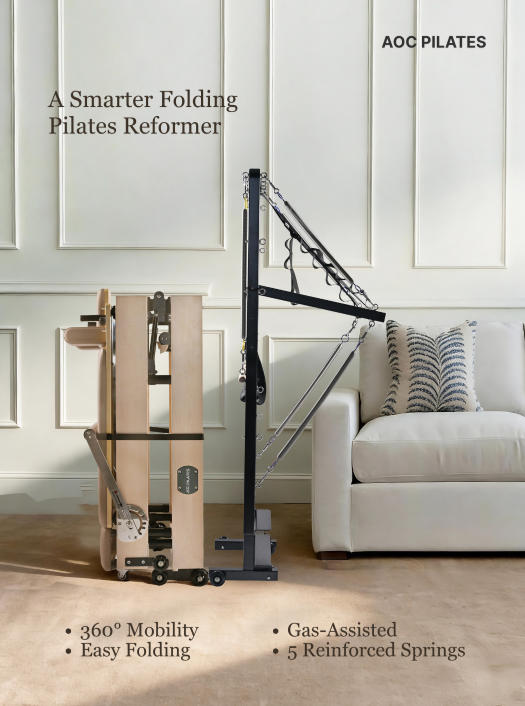
Large exercise equipment creates a final-mile problem that smaller consumer products do not. A crate may reach a studio successfully but still need two people, special access arrangements and a qualified installer to become usable.
Decide in advance who unloads and carries the equipment, who assembles it, who confirms the finished configuration and who removes the packing. Peak Pilates' shipping information also emphasizes keeping packaging and promptly documenting shipping damage. The specific deadlines are Peak's own; a new brand needs a practical receiving procedure suitable for its transport arrangement.
The installation record should identify each machine, its location and any missing or damaged component. If an issue is discovered, determine whether it is transport damage, an assembly problem or a manufacturing nonconformity before choosing the remedy.
Warranty language needs similar precision. “One-year warranty” does not tell the customer who pays return freight, local technician time or the cost of shipping a small replacement wheel internationally. Set those rules while evaluating supplier offers.
7. Use the First Batch to Improve the Second
Treat initial deliveries as structured evidence. Record actual landed cost, the rate of packaging damage, installation time, customer questions, missing accessories and any product faults. Separate one-off mistakes from repeated issues.
If a particular strap is frequently missing, improve packing and kit identification. If customers struggle with an adjustment, review the manual and actual mechanism. If the upholstery is damaged in transit, examine the protected surfaces before concluding that the material itself is defective.
Reorder only after confirming the approved production revision, any corrective changes and realistic demand. The objective of a first order is not to prove that every initial assumption was right. It is to establish a product, an operating cost and a supplier process you understand well enough to scale.